What Is a Remote Job? Everything You Need to Know

Far Coder Team
Mon Mar 30 2026
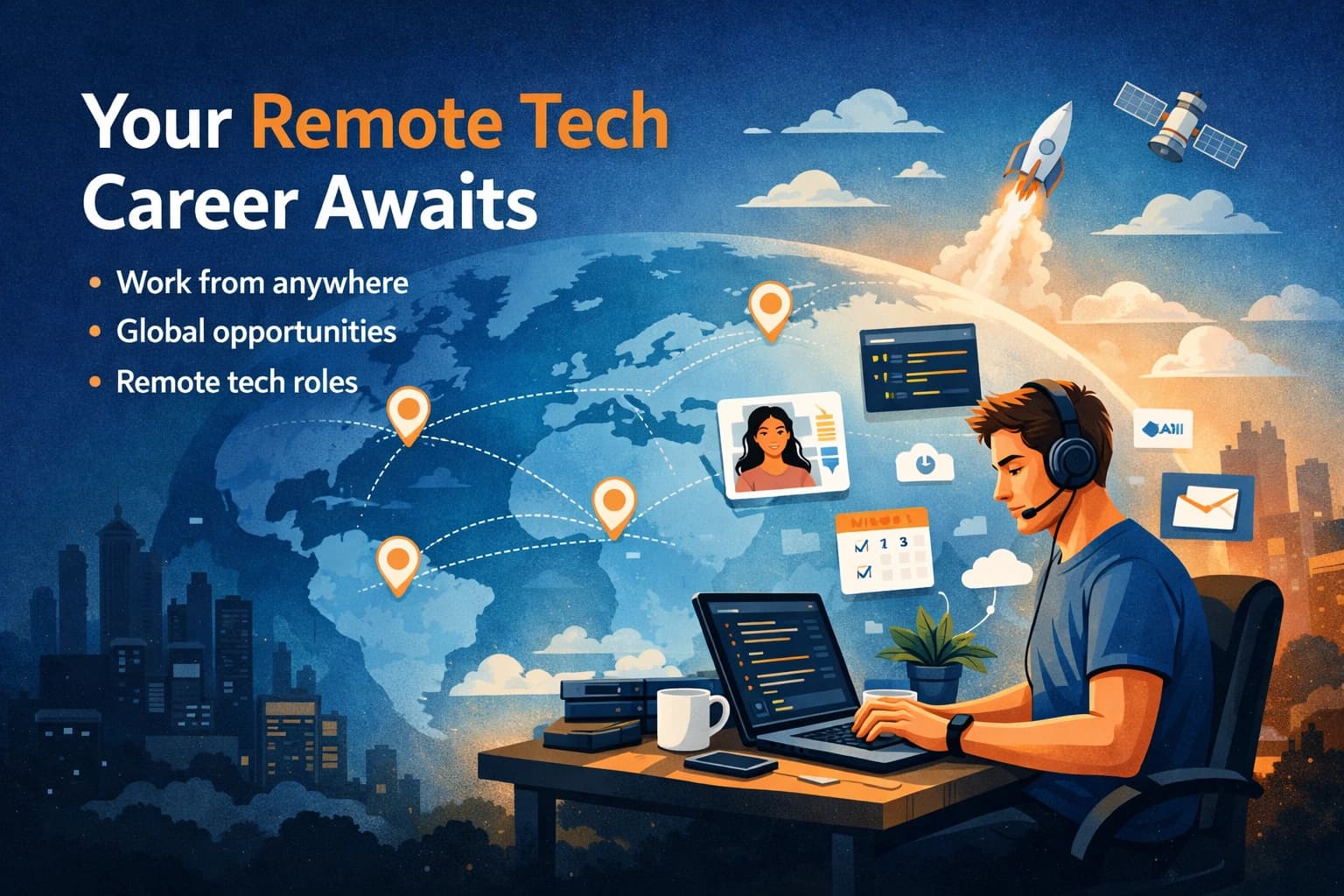
A remote job is a fully online role where work is done from anywhere, with performance based on output rather than location. Unlike temporary work-from-home setups, remote jobs are designed to operate digitally from the start using tools like Slack, GitHub, and Zoom. Remote work has become the standard in tech because it allows companies to hire globally and professionals to access better opportunities and salaries. Success in remote roles depends on strong communication, discipline, and the ability to work asynchronously. Overall, remote jobs offer flexibility, global career access, and are now a permanent part of the tech industry—but choosing the right remote-first company is key.
Most professionals have heard the term. Few understand what a remote job actually demands, or what it can deliver.
A remote job is a position where you complete all your work outside a traditional office. You might work from home, a co-working space, or anywhere with a reliable internet connection. Your employer and your results, not your location, define your role.
Remote work has restructured the global tech industry. It is no longer an experiment or a perk reserved for senior employees. It is the standard operating model for thousands of companies worldwide, and it is reshaping how developers, engineers, and designers build their careers.
This guide explains what a remote job truly involves, how remote work functions day-to-day, why it has become dominant in tech, and how you can find the right remote job opportunity today.
What a Remote Job Really Means
A remote job means no fixed office, no required commute, and no mandatory desk. You perform your work digitally, through video calls, project management tools, and online collaboration platforms. Your output defines your value, not your physical presence.
Remote jobs span every tech discipline. Developers, DevOps engineers, cybersecurity professionals, data analysts, and UI/UX designers all work remotely at scale. The role of an online job is no longer tied to geography; it is tied to skill, delivery, and communication.
Platforms like farcoder list thousands of verified remote job openings across these categories. Every listing is fully remote, not hybrid, not location-dependent, and not subject to change after you accept the offer.
Many people confuse a remote job with a work-from-home arrangement. The difference matters. Work from home often means a temporary setup for an office-based role, a concession made during disruption, not a permanent structural decision. A remote job is a permanent, structured position designed to function entirely online from day one.
That distinction shapes everything: your contract, your equipment budget, your communication norms, and your career trajectory. Remote jobs come with remote-first processes built around async work. Work-from-home arrangements often force digital tools onto office workflows that were never designed for them.
How Remote Work Operates Day-to-Day
Remote work runs on clear communication and documented processes. Most remote teams operate using tools like Slack, Jira, GitHub, Zoom, and Notion. These platforms replace the office as the central hub for collaboration, and for high-performing distributed teams, they work better.
Distributed teams often span multiple time zones. Employers set core hours for overlap, typically a two to four-hour window where all team members are online simultaneously. Outside those hours, async communication takes over. You write, share, and move work forward without requiring real-time interaction.
This async-first model demands precision. You document decisions. You write updates that anticipate follow-up questions. You move tasks forward independently rather than waiting for a meeting to unblock progress. These habits separate productive remote professionals from those who struggle without the structure of an office.
Discipline drives remote success. You manage your schedule, protect your focus time, and deliver results without anyone looking over your shoulder. That autonomy is exactly what high-performing tech professionals demand, and it is exactly what remote work provides when the culture supports it.
Not all remote cultures are equal, though. The strongest remote employers invest in documentation, async tooling, and structured onboarding. They have written playbooks for how decisions get made, how feedback gets shared, and how performance gets evaluated. Identifying those companies early in your search saves significant time.
The Tools That Power Remote Tech Teams
Every effective remote team runs on a core stack of collaboration tools. Understanding these tools, and demonstrating proficiency with them, signals to employers that you can integrate immediately without a lengthy ramp-up period.
Communication runs through Slack or Microsoft Teams for async messaging, and Zoom or Google Meet for synchronous calls. Code lives on GitHub, GitLab, or Bitbucket. Project management flows through Jira, Linear, or Asana. Documentation accumulates in Notion, Confluence, or Google Docs.
The best distributed teams treat their documentation as a product. Every decision, every architectural choice, every process change gets recorded in writing. This creates a knowledge base that new team members can access independently, reducing onboarding time and eliminating single points of failure.
Security tooling also plays an essential role. Remote teams use VPNs, password managers, two-factor authentication, and endpoint management solutions to protect distributed access. Cybersecurity professionals in remote environments are in critical demand precisely because securing a distributed team requires specialised expertise.
Why Remote Tech Careers Are Now the Norm
Remote work expanded fast in tech because the work demands a screen, not a desk location. Code compiles the same way in Karachi as it does in San Francisco. Data pipelines run regardless of where the engineer sits. The industry recognised this reality early and built infrastructure to match.
Location-independent work widens your career options dramatically. You stop competing only with local candidates. You compete globally,and you access global pay. A senior developer in a mid-tier city can now earn a top-tier salary by working for a company anywhere in the world. That is a structural change in how tech careers generate wealth.
Farcoder exists precisely to connect that developer with the right employer. Every role on the platform is remote by design, built for professionals who understand the value of location-independent work and want access to the full global market.
Companies benefit from remote hiring equally. They access a deeper talent pool, reduce overheads on office space, and build teams based on skill, not proximity. Remote hiring has become a competitive advantage for fast-moving tech organisations that cannot afford to limit their search to a single city or country.
The shift is structural, not temporary. Remote job opportunities have become a permanent fixture of the tech labour market. Companies that refused to adapt have consistently lost experienced engineers to competitors who offer location flexibility. The market has made its preference clear.
Remote Work Across Different Tech Disciplines
The remote job model applies across virtually every technical discipline. Software development leads the way; frontend, backend, full-stack, mobile, and blockchain engineers all work remotely at scale. The tools are digital, the output is digital, and the collaboration is entirely online.
Data professionals operate in cloud platforms, BigQuery, Snowflake, Databricks, and AWS, which are accessible from any location. Data engineers build pipelines remotely. Data analysts produce reports and dashboards through shared cloud environments. Machine learning engineers train and deploy models on remote infrastructure.
DevOps and cloud engineers manage infrastructure through code. Their terminals connect to remote servers. Their monitoring dashboards run in browsers. Their on-call responsibilities operate through alert systems that reach them wherever they are. Remote work is not a workaround for these professionals; it is the natural state of their work.
UI/UX designers use browser-based tools like Figma that were built for remote collaboration. Feedback cycles run through recorded walkthroughs, async video comments, and annotated design files. The design review process requires no physical presence, only clear communication and a reliable connection.
QA engineers, technical writers, developer advocates, and cybersecurity analysts round out the picture. Every role that produces digital output fits the remote model. The only limiting factor is whether the employer has built the culture and processes to support it, and that is the essential qualification to verify before you accept any remote offer.
What to Look for in a Legitimate Remote Job
Not every job posted as remote delivers on that promise. Some roles require relocation after a trial period. Others restrict remote work to specific countries or time zones. A small number use the remote label to attract applications while maintaining expectations that only work in an office context. You need to verify before you apply.
Essential details to confirm before accepting any remote offer: Is the role fully remote or hybrid? Does the company support async workflows, or does it expect real-time availability across inconvenient hours? Are there location restrictions that affect your eligibility? What does the equipment and home office support package include? These questions separate credible remote employers from those who use the label loosely.
Examine the company's remote history. How long have they operated as a remote-first organisation? Do their engineering blog posts, job descriptions, and public communications reflect genuine async culture? Companies that converted to remote work reluctantly often retain office-centric habits that create friction for distributed employees.
Look at the team structure. Are managers experienced in leading remote teams? Does the company hire globally, or do they restrict remote work to employees in specific regions? Global hiring reflects genuine remote commitment. Regional restrictions often signal that full remote adoption is still incomplete.
Focus on employers with established remote cultures, companies that measure output over hours, invest in remote tooling, and document their processes thoroughly. Finding those employers is significantly easier when you search on a platform built exclusively for verified remote roles. FarCoder screens listings so you spend your time evaluating quality opportunities, not filtering out misleading ones.
Start Your Remote Tech Career Today
A remote job gives you control over your environment, your schedule, and your earning potential. Understanding what it truly involves puts you ahead of every applicant who applies without thinking it through.
Remote work is the dominant model in global tech. The remote job opportunities are real, the demand for distributed talent is strong, and the roles span every discipline from software development to cybersecurity. The only question is whether you are positioning yourself to access them effectively.
Browse verified remote tech roles at farcoder, where coders find their distance. Your next remote job is already listed. Go find it.
Browse remote developer jobs on FarCoder → farcoder.com/jobs
Frequently Asked Questions (FAQ)
What is the difference between a remote job and work-from-home?
+−
A remote job is fully designed to be done online from anywhere, while work-from-home is usually a temporary arrangement for an office-based role.
What skills are important for remote jobs?
+−
Strong communication, time management, self-discipline, and the ability to work independently are essential for succeeding in remote roles.
Are remote jobs limited to certain tech roles?
+−
No, remote jobs are available across many fields including development, design, data, DevOps, and cybersecurity, as long as the work can be done digitally.
About the Author

Muhammad Mansoor Ishaq
**Muhammad Mansoor Ishaq** is the Co-Founder of FarCoder and an experienced web developer specializing in WordPress, Shopify, Wix, and Squarespace. In addition to his technical expertise, he is a regular contributor to FarCoder’s blog, where he writes about remote work, software development careers, web development, freelancing, digital transformation, workplace productivity, hiring trends, and the future of distributed teams. Drawing from both hands-on industry experience and ongoing research, Muhammad creates practical, insightful content that helps job seekers, developers, and employers succeed in an increasingly remote-first world. His work focuses on bridging the gap between technology, talent, and modern work opportunities across global markets.
Connect on LinkedIn